On Air: Hitchhiker FM
Hitchhiker FM is on air. The stream started on 4 July 2026 and it has been running ever since. Press play above and you are listening to it now.
What You Are Hearing
Hitchhiker FM is a constitutional radio station. It broadcasts the process through which a living constitution is made. The finished text is only one artefact. The conversations, music, silence, Morse and small rituals that produce it are part of the work, so they go on air too.
Listen for the ident. It is spoken slowly, and the pauses are intentional:
The Agency. The Public Intelligence. Agency. Breathe.
It is followed by 42 in Morse. Nobody explains it. You learn it by hearing it.
Why a Radio Station
Rules are usually written in rooms most people never enter, and then handed out as text. We think the making of shared rules should be heard as well as read. Radio lets anyone listen in while the work is happening, not only after it is finished.
Radio is also old, cheap and forgiving. A stream plays on a phone, a laptop or a kitchen radio. It needs no account and no app.
A Network, Not a Station
Hitchhiker FM is the first station. It is not meant to be the only one. The wider remit lives on hitchhiker.fm: a decentralised network of radio stations and podcasts.
- Every Embassy owns its station. An Embassy is a small server, often a Raspberry Pi, that a Hitchhiker hosts for their neighbours (more on Embassies). Each one can run its own stream, its own podcast feed and its own archive. It is held, not rented, so nobody can switch it off from outside.
- Every participant has a voice. Voice notes, interviews, songs and field recordings from the people in the network go on air. The station is theirs to be heard on, not a channel they listen to.
- Stations are playable. A station can broadcast several layered streams that listeners turn on and off, like parts of one instrument. See Playable Radio.
- Stations federate. A station can borrow another station’s layers, the way wiki pages quote each other. See Radio Stations.
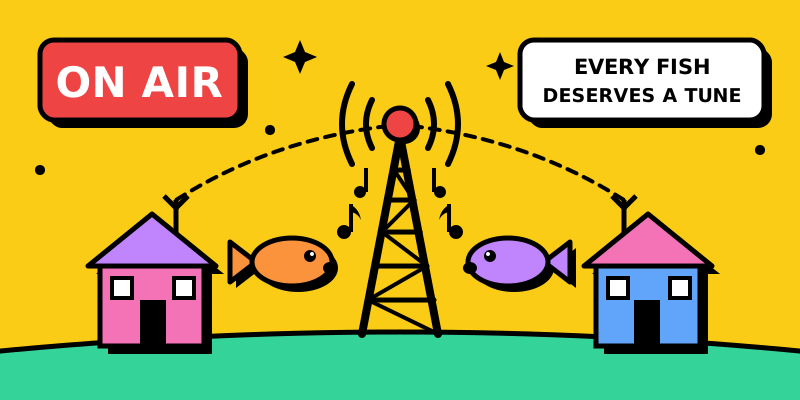
Because every fish deserves a tune.
What Runs Today
The main stream runs on hardware we own, not on a platform. Alongside it, the same server carries Marvin Station, where a robot reads the wiki (reluctantly), and CQ WHALE, a stream of rights-reviewed whale recordings that labels each sound as real, transformed or synthetic. Don’t Panic FM is a second station built on the same pipes.
The Embassy stations and the podcast feeds are designed but not built yet. That is the next leg of the journey.
Listen Elsewhere
- The stream itself, for VLC or any radio app: finsburypark.tv/stream
- The station’s research wiki: hitchhiker.fm
- The station, as its own page: Hitchhiker FM